ServicesPreventative Maintenance
Loading Dock Preventative Maintenance in Lansford
We service your dock levelers, vehicle restraints and overhead doors on a set schedule, so small wear gets fixed before it stops a truck. You get the scope and pricing factors in writing before we start, and a written report when we leave.
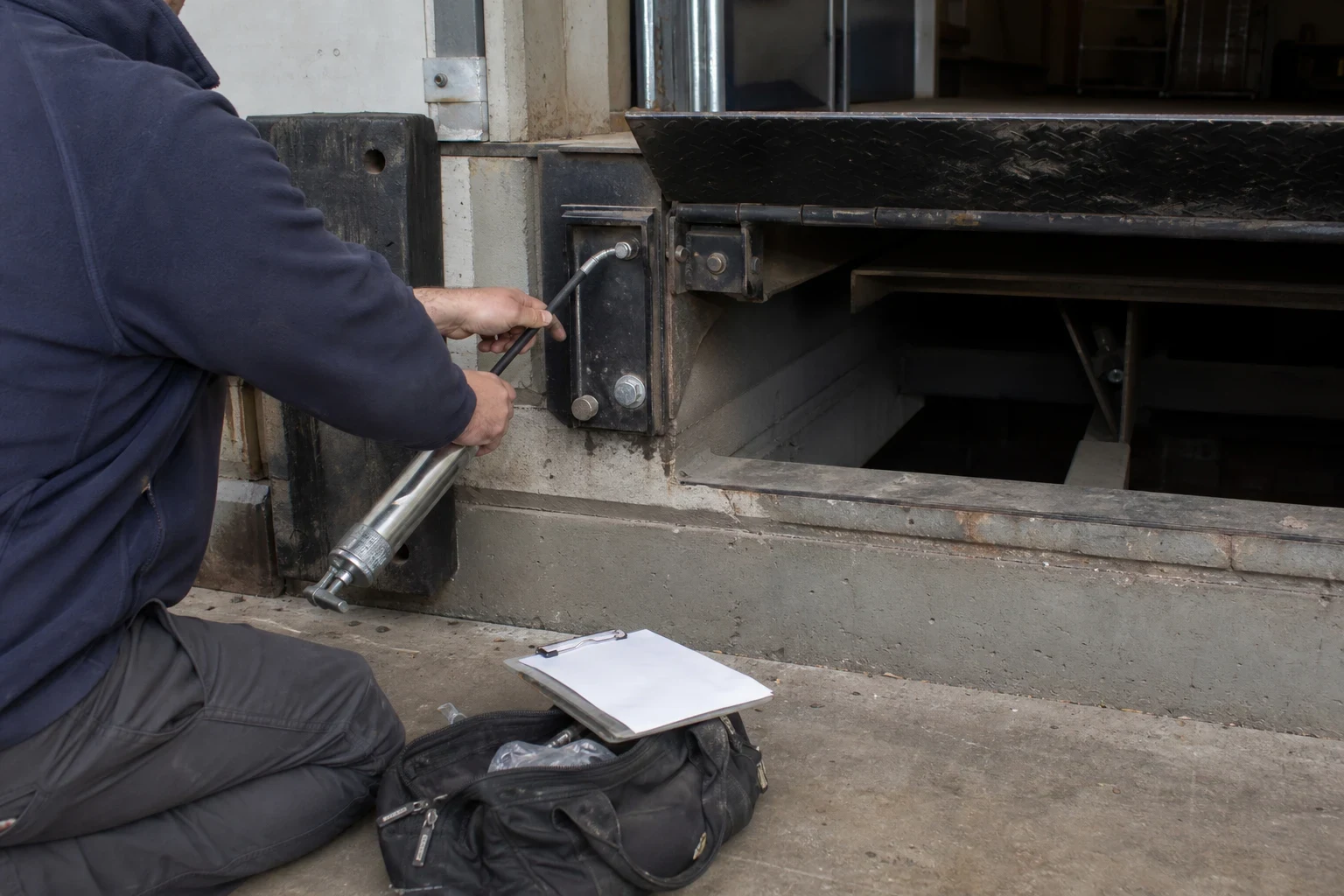
Planned service keeps the dock working
Most dock breakdowns start small. A hydraulic hose weeps for months. A door spring loses tension one cycle at a time. A restraint sensor gets knocked out of line by a trailer. None of it stops the dock until the day it does, and that day is usually a busy one.
Preventative maintenance means we come out on a schedule, check each piece of equipment against a checklist, adjust and lubricate what needs it, and write down what is wearing. You decide what gets fixed and when.
Before the first visit, we put the scope in writing: which doors, which positions, what we check and what each visit costs. If we find a repair, we quote it in writing before we touch it. Nothing gets added to the bill that you did not see first.
What a maintenance visit covers
- Dock levelers
- We check hydraulic fluid level and condition, hoses, cylinders and fittings. On mechanical levelers we look at springs, the hold-down and the release chain. We inspect the lip hinge, lip extension and deck welds for cracks, and clean out debris from the pit.
- Vehicle restraints
- We run the hook or bar through a full cycle, check the signal lights inside and out, and confirm the sensors read correctly. If the outside light tells a driver he is locked in while the hook is not actually holding the trailer, someone can pull away with a forklift still on board. We check for that on every visit.
- Overhead doors and high speed doors
- We check springs, cables, drums, rollers and track alignment, and balance the door. We test safety edges and photo eyes, look at the motor and controls, and note worn bottom seals and weatherstripping.
- Rolling grilles
- We clean and lubricate the guides, check the curtain links for bent or broken sections, and make sure the locks and operator work smoothly.
- A written report after each visit
- You get a list of what we checked, what we adjusted and what is wearing, sorted by how soon it needs attention. It doubles as a record for your safety and compliance files.
Signs your dock is due for a service plan
Repairs keep coming as surprises
If every service call is a breakdown, nobody is catching wear early. A schedule turns surprise repairs into planned ones.
Levelers are slow or drift down
A hydraulic leveler that rises slowly, settles under load or leaves oil in the pit usually has a fluid, seal or hose problem that gets worse with time.
Doors are noisy or uneven
Grinding, jerking or a door that hangs crooked points to worn rollers, frayed cables or springs going out of balance. Spring and cable failures are the ones that hurt people.
Restraint lights don't match the hook
If drivers or dock workers have stopped trusting the lights, the restraint needs attention now, not at the next convenient time.
Winter is coming
Cold makes hydraulic fluid thick and seals stiff, and road salt from trailers eats at pits and door tracks. A fall visit catches that before the first hard freeze.
How we set it up and how a visit runs
- 1
Walk the dock with you
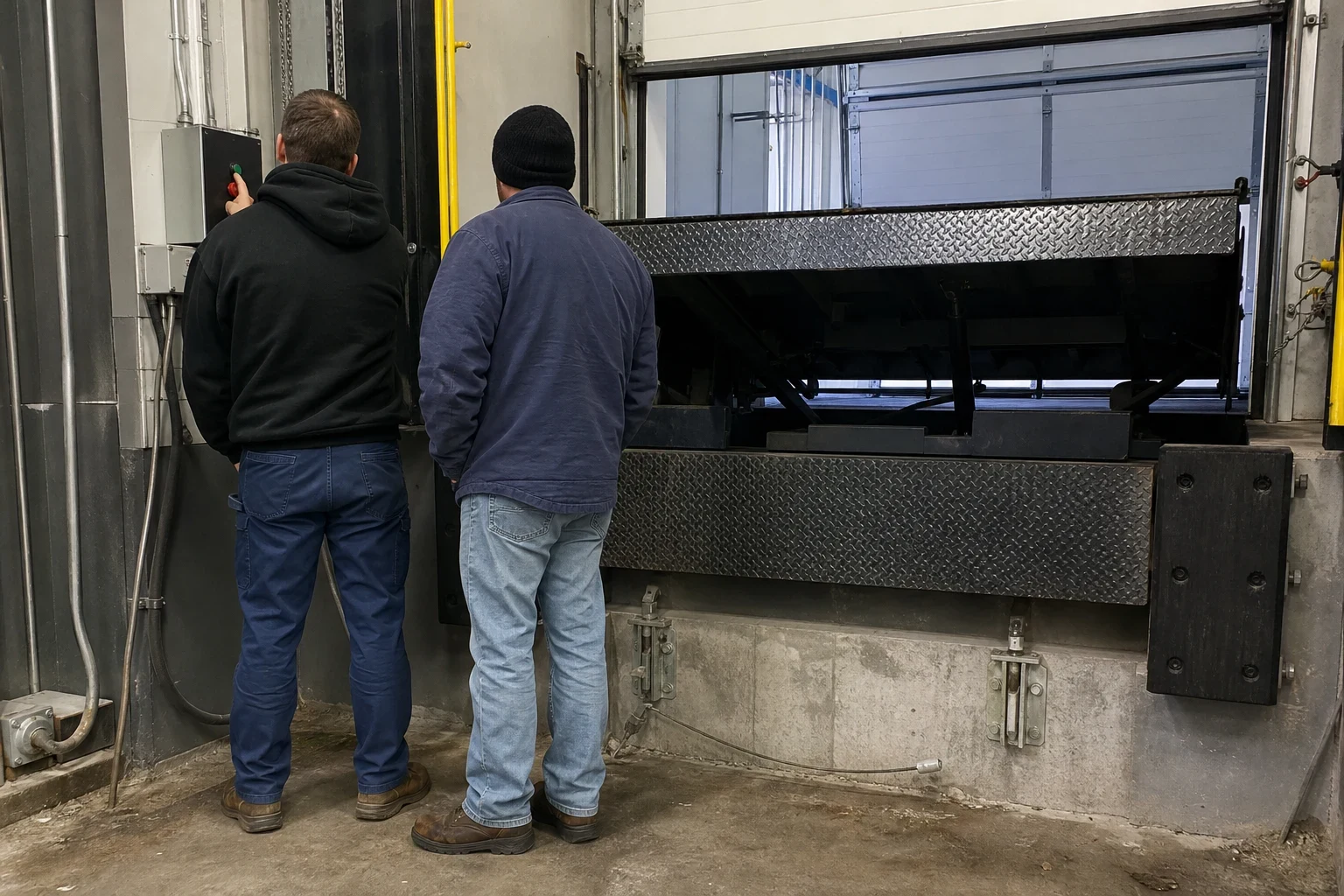
We start by looking at every position: the type of leveler, restraint and door at each one, its age and how hard it works. We ask how many trailers you move and when your slow hours are.
- 2
Put the plan in writing
You get a written scope that lists the equipment, the visit frequency and what each visit costs. Busy docks may need quarterly visits. Lighter ones may do fine twice a year.
- 3
Service one position at a time
On the day, we work through the dock one door at a time so the rest stay open. We tag out each position before we work on it and put it back in service before moving on.
- 4
Report and quote any repairs
Before we leave, we go over what we found. Any repair comes as a separate written quote. You can approve it, schedule it or wait for the next visit.
What sets the price of a maintenance plan
The price is set by the equipment on your dock and how often you want us there. We write it down before the first visit so you know the cost of each visit ahead of time. Repairs are always quoted separately, in writing.
- Number of positions
- Each door, leveler and restraint takes time to check. A six-door warehouse costs more per visit than a two-door receiving dock.
- Equipment type and age
- Hydraulic levelers and high speed doors have more parts to check than mechanical levelers or manual doors. Older equipment often needs more adjusting.
- Visit frequency
- Quarterly visits cost more per year than twice-yearly ones, but they catch wear sooner on docks that run hard.
- Timing and access
- Working around shift schedules, after-hours visits or docks with heavy traffic can change how long a visit takes.
Questions about preventative maintenance
Something not covered here? (570) 658-8795
How many service visits does our dock need in a year?
Two to four visits a year covers most facilities. A distribution center moving trailers around the clock wears equipment far faster than a store taking a handful of deliveries each week. We look at your traffic, suggest a schedule and let you make the call.
Will you shut down our whole dock?
No. We work one position at a time and keep the rest running. If you tell us your slow hours, we plan the visit around them.
What happens if you find something broken?
We show you what we found and write up a quote for the repair. We do not do extra work without your approval. Small adjustments that are part of the visit are already in the price.
Do you service equipment you didn't install?
Yes. We service most makes of dock levelers, vehicle restraints, overhead doors and rolling grilles. If a part is hard to get for an older unit, we tell you that up front.
Can the report help with safety inspections?
Our written report lists what we checked and what we found at each position, with dates. Many facilities keep it with their safety and compliance records.
Put your dock on a maintenance plan
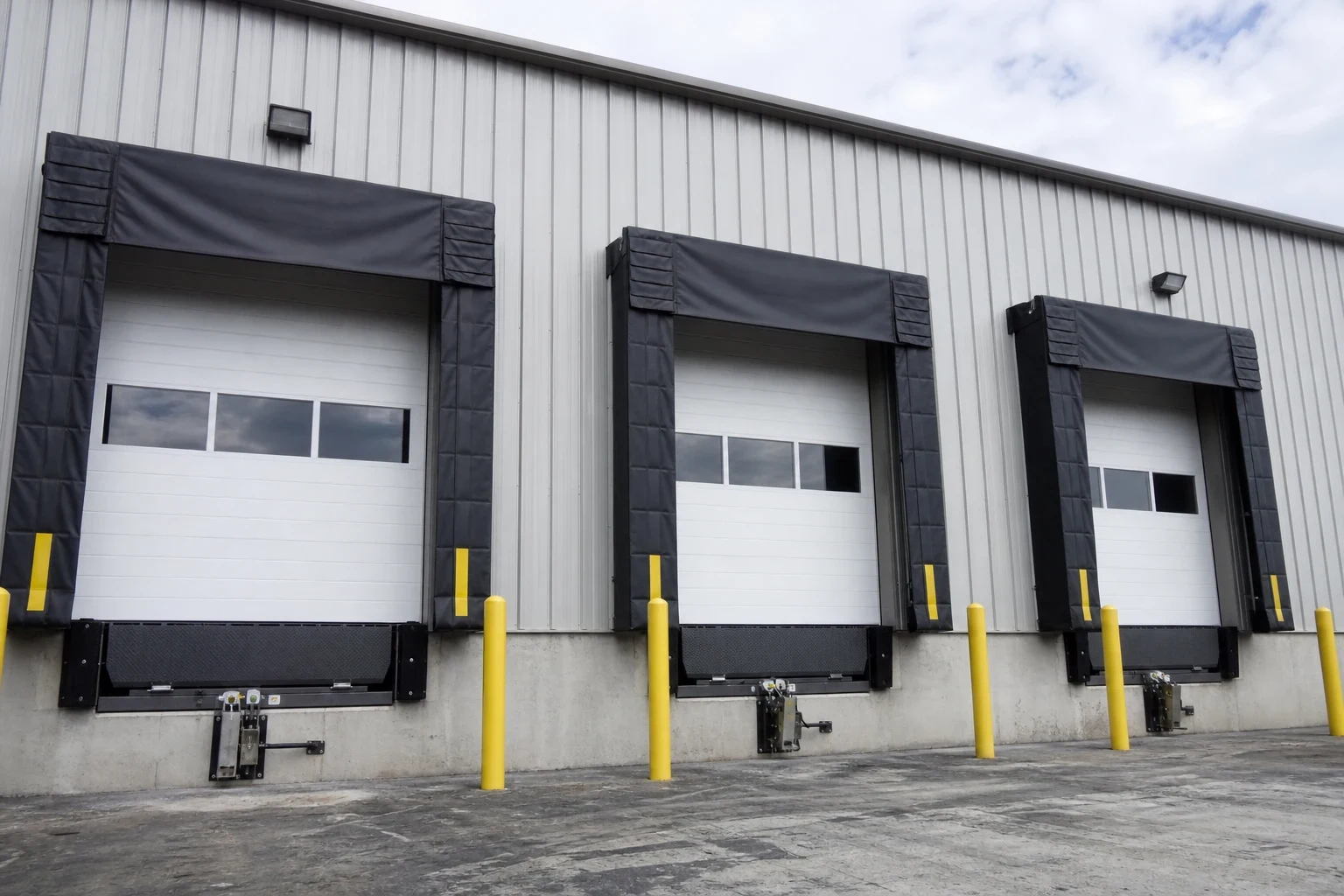
Give us a rough count of your positions and the kind of leveler, restraint and door at each. We'll come out, look it over and hand you a written plan that shows the price per visit.